
Japan Is the Trip You've Been Putting Off. Here's Why 2027 Is the Year to Go.
Tokyo, Kyoto and Osaka — where ancient temples sit two streets from Michelin-starred restaurants and every detail of daily life feels quietly extraordinary.
Japan has a way of making every other destination feel slightly ordinary by comparison. Not because it is flashier or louder — it is often neither. But because it operates at a level of intention and detail that you simply do not encounter anywhere else on earth. The food is better. The trains run on time to the second. Strangers go out of their way to help you even when you share no common language. And then there are the temples, the bamboo forests, the neon-lit alleys, the ramen counters with eight seats and a Michelin star. Japan earns the hype, and then exceeds it.
Why Japan, Why Now
Japan has been on the bucket list for most travelers for years. The honest reason most people haven't gone yet is that it feels complicated to plan. The language barrier feels significant. Navigating three cities feels like logistics you don't want to manage on vacation. And because Japan rewards preparation — knowing which neighborhoods to stay in, which restaurants you need a reservation for months in advance, which temples feel genuinely spiritual versus purely touristic — going without the right guidance can mean spending a week in one of the world's most extraordinary countries and never quite getting to the heart of it.
That is exactly the problem a well-curated group trip solves. You get Japan done right, with people who have done the work, on your first visit.
Six Reasons Japan Belongs on Your List
The food alone is worth the flight
Tokyo has more Michelin stars than any city on the planet. But the real discovery is the ramen counter with eight seats, the standing sushi bar where the chef has been perfecting the same dish for 30 years, and the convenience store snack that somehow embarrasses most restaurants back home.
Ancient and modern exist side by side
You can spend the morning at a 1,200-year-old temple and the afternoon in a department store basement that sells 40 varieties of perfectly wrapped chocolate. Japan does not choose between its past and its future. It holds both simultaneously, and that contrast never gets old.
It is one of the safest countries in the world
Japan consistently ranks among the safest destinations for international travelers. People leave wallets on café tables. Lost items get turned in to the nearest police box. You can walk anywhere, at any hour, without the low-level vigilance that exhausts you in other cities.
Every city is completely different
Tokyo is relentless, electric, and endlessly layered. Kyoto is contemplative, preserved, and achingly beautiful. Osaka is loud, warm, and obsessed with feeding you. Visiting all three in a single trip gives you three completely different versions of what Japan can be.
The culture of hospitality is unlike anything else
The Japanese concept of omotenashi — wholehearted hospitality — shapes every interaction. Hotel staff who walk you to the elevator rather than pointing. Servers who remember what you ordered and bring a refill before you ask. A standard of care that quietly recalibrates your expectations for the rest of the trip.
Mount Fuji is exactly as breathtaking as they say
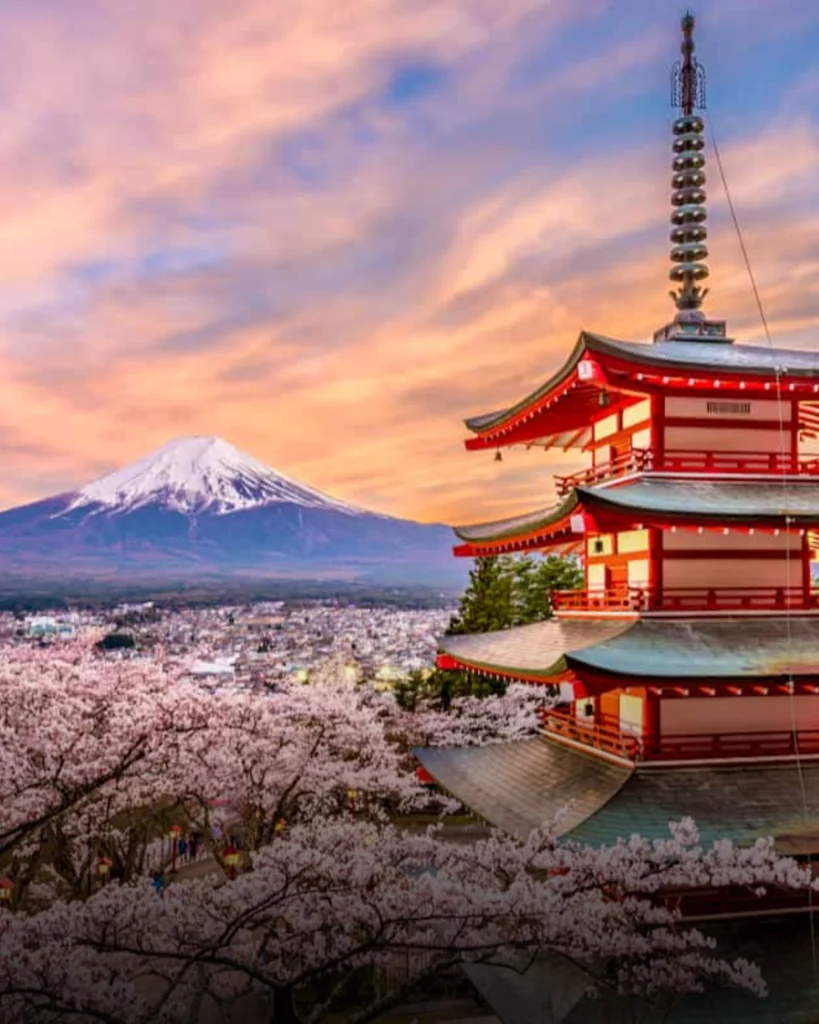
There are things you see in photos for so long that you expect to be disappointed by the real thing. Fuji is not one of them. Catching your first view of it — across Lake Kawaguchi on a clear morning — is genuinely one of those travel moments that stops you mid-sentence.
Japan does not just meet your expectations. It quietly dismantles them and replaces them with something larger.
Tokyo, Kyoto and Osaka — Three Cities, One Journey
Most travelers make the mistake of spending their entire Japan trip in one city. The country rewards movement. Tokyo, Kyoto and Osaka are each essential, and together they give you the complete picture.
Tokyo — The World's Most Electric City
No city on earth moves at quite the frequency Tokyo does. Shibuya's pedestrian crossing is the most photographed intersection in the world for a reason. Shinjuku's golden hour skyline from the observation deck will stop you completely. Asakusa's Senso-ji temple at dawn — before the crowds — is one of those quiet experiences that stays with you long after you're home. And Harajuku, Shimokitazawa, Yanaka: every neighborhood is its own universe.
Kyoto — The Soul of Japan
If Tokyo is Japan's future, Kyoto is its memory. The city has over 1,600 Buddhist temples and 400 Shinto shrines. The Fushimi Inari torii gates tunnel through a mountainside for miles. The Arashiyama bamboo grove is otherworldly at the right hour. The geisha districts of Gion feel genuinely preserved rather than performed. Kyoto is the city you come to Japan for, even if you don't know it yet.
Osaka — Japan's Most Welcoming City
Osakans have a reputation — deserved — for being Japan's most outgoing, food-obsessed people. The city's unofficial motto is kuidaore: eat until you drop. Dotonbori's neon canal is pure spectacle. Takoyaki and okonomiyaki on every corner. Osaka Castle, perfectly preserved from 1583. And a nightlife scene that makes Tokyo feel like it turns in early. If Kyoto feeds the soul, Osaka feeds everything else.
Questions First-Time Japan Travelers Always Ask
Is Japan difficult to navigate as a first-time visitor?
It can be, which is exactly why the right operator matters. The language barrier is real, the transit system is genuinely complex, and the best experiences in each city require advance knowledge and often advance reservations. Traveling with JetBlack means all of that has been handled — you arrive ready to experience Japan, not manage it.
What is the best time of year to visit Japan?
Spring (late March to early April) for cherry blossoms and fall (mid-October to mid-November) for autumn foliage are the most celebrated seasons. June is also excellent — the Golden Week crowds have cleared, temperatures are warm, and the early rainy season gives Kyoto's temples and mossy gardens a misty, cinematic quality that photographers travel specifically to capture.
Is Japan expensive?
Japan is more affordable than most Western travelers expect, particularly at the mid-to-luxury level. The yen has remained favorable against the dollar, accommodation and transportation are excellent value for the quality, and the food — even at the highest end — is priced more reasonably than equivalent restaurants in New York, London or Paris.
Is Japan welcoming to Black travelers?
Japan is one of the safest and most respectful destinations in the world for international travelers of all backgrounds. You will draw curiosity in less touristy areas simply for being foreign, but the cultural norm of respectful restraint means that curiosity is almost always expressed with quiet courtesy rather than intrusion. The overwhelming majority of Black travelers to Japan report it as one of their most comfortable and affirming international experiences.
Why travel Japan in a group rather than solo?
Solo travel in Japan is entirely possible, but a curated group trip changes the experience in meaningful ways. Private transport between cities. A guide who knows which ramen counter to go to and why. Shared moments — the first view of Fuji across the lake, a temple at sunrise before the crowds — that become the stories you tell for years. And the practical reality that the best access, the best accommodations, and the best local experiences are often unlocked at the group level, not the individual one.
JetBlack's Japan Trip Departs June 2027
Tokyo, Kyoto and Osaka. Small group. All the logistics handled. Everything you need to experience Japan the right way.
From $2,719 per person · $475 to reserve your seat Only 7 seats remaining. Deposit is non-refundable.